How much does a heat pump cost in the UK in 2026?
The median air source heat pump installation costs about £13,000 before the £7,500 grant. What drives the price, what is included and how to check a quote.
Numbers checked against official sources on 7 October 2026
In 30 seconds
- The median air source heat pump installation under the government grant scheme cost £13,041 in 2025/26, including the unit, labour and related upgrades.
- After the £7,500 Boiler Upgrade Scheme grant, that is about £5,500 (England and Wales). Oil and LPG homes get £9,000 off until 31 March 2027.
- A like-for-like gas combi boiler swap is usually £1,800 to £3,500, so a heat pump still costs about £3,200 more upfront after the grant.
- Size, radiators, the hot water cylinder and how much pipework changes are what move the price most.
Heat pump prices quoted online range from “£3,000” to “£20,000”, which is useless if you are trying to plan. The most reliable figure comes from the government grant scheme itself, because every grant-funded installation reports its cost. This guide uses that data, explains why your quote may differ, and shows what to check before you sign.
On this page
The typical price in 2026
Nesta, an innovation charity that analyses the Boiler Upgrade Scheme data, reports that the median cost of an air source heat pump installation was £13,041 in 2025/26, up slightly from £12,973 the year before (Nesta, April 2026). “Median” means half of installations cost less and half cost more. The figure is in real terms and includes the heat pump, the installer’s fees and associated upgrades in the home.
Prices have fallen: Nesta says the median is 11% lower than when the scheme launched in 2022.
| Typical home | Oil or LPG home, off gas grid | |
|---|---|---|
| Median installed price | £13,041 | £13,041 |
| Boiler Upgrade Scheme grant | −£7,500 | −£9,000 |
| What you would pay | £5,541 | £4,041 |
Two caveats. The grant applies in England and Wales only. And the median is a midpoint, not a promise: an older, larger or harder-to-heat home can cost a lot more.
What drives the price up or down
1. The size of the heat pump
Heat pumps are sized in kilowatts (kW) to match how much heat your home loses on a cold day. Bigger homes and leakier homes need bigger units, which cost more. Nesta reports that most installations are now between 4 kW and 12 kW, and that only 18% are 12 kW or larger, down from over 35% when the scheme started. That shift to smaller systems is part of why the median price fell.
Insulating first can mean a smaller, cheaper heat pump. It is worth asking your installer whether loft or cavity wall insulation would change the size they recommend.
2. Radiators and pipework
A heat pump heats water to a lower temperature than a gas boiler, so some rooms may need larger radiators to stay warm. Some homes need none changed, others need most of them replaced. Microbore (very thin) pipework can also need upgrading. This is usually the biggest difference between two quotes for similar houses.
3. The hot water cylinder
Most heat pumps heat water into a storage cylinder rather than on demand like a combi boiler. If you have a combi boiler, you will usually need a cylinder and somewhere to put it, which adds cost and takes up a cupboard. Heat pumps and combi boilers explained.
4. The type of heat pump
- Air-to-water (air source): the most common type, 98% of grant-funded installations. The prices above refer to this type.
- Ground source: usually much more expensive because of the trenches or boreholes, but more efficient. The grant is the same £7,500.
- Air-to-air: blows warm (or cool) air through indoor units, like air conditioning. It does not heat your hot water. The grant is £2,500.
5. Electrics, controls and access
An upgrade to your consumer unit or main fuse, new controls, a concrete base for the outdoor unit and difficult access can each add to the bill. A good quote lists them separately.
Compared with a new gas boiler
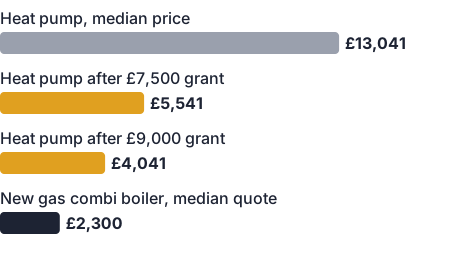
A like-for-like gas combi boiler replacement was usually quoted between £1,800 and £3,500 in 2026, with a median around £2,300, according to an analysis of 2,000 quotes by installer Heatable (an installer’s own figures, so treat them as a guide).
So after the grant, the typical heat pump costs roughly £3,200 more upfront than a new boiler (£5,541 minus £2,300). Whether you earn that back depends on running costs:
- At October 2026 prices, a well-installed heat pump with a seasonal efficiency of 3.5, replacing a 90% efficient gas boiler, saves about £114 a year on energy, or about £223 if you also close your gas account and stop paying the gas standing charge.
- At £223 a year, the extra £3,200 takes about 14 to 15 years to recover. At £114 a year it takes almost 30.
- A cheaper heat pump electricity tariff, or replacing oil or LPG instead of gas, shortens that a lot.
We show the full workings, and what happens at different efficiencies, in heat pump vs gas boiler running costs.
Try it with your own numbers. Your gas usage and tariff change the answer more than anything else.
Open the calculatorHow to check a heat pump quote
Get at least three quotes from MCS-certified installers, because only they can claim the grant. Then check each one for:
- A room-by-room heat loss calculation. This decides the size of the unit and radiators. A quote based on “three bedrooms, about 8 kW” is not a design.
- The expected seasonal efficiency (SCOP) or flow temperature. Lower flow temperatures usually mean higher efficiency and lower bills.
- Every radiator change listed by room. This is where quotes differ most.
- The cylinder size and where it goes.
- The full price, the grant and what you pay, shown as three separate lines.
- Warranty length for the unit and for the workmanship, and who services it.
- Electrical work, controls and making good (redecorating, filling holes) included or not.
Timing matters in 2026–27. Installation is VAT-free only until 31 March 2027, after which 5% VAT applies, and the £9,000 rate for oil and LPG homes ends on the same day. What changes after March 2027.
Frequently asked questions
How much is a heat pump after the £7,500 grant?
Using the 2025/26 median installation price of £13,041, about £5,500. Your price depends on your home’s size, radiators and hot water setup.
Why is my quote much higher than £13,000?
Large or poorly insulated homes need bigger units and more radiator changes. Ask for a breakdown, and compare at least three MCS-certified quotes based on a proper heat loss calculation.
Is a ground source heat pump worth the extra cost?
It is more efficient, but the groundworks make it much more expensive. It suits larger homes with land, especially off the gas grid. The grant is the same £7,500 (or £9,000 for oil and LPG homes until March 2027).
Do I need to replace all my radiators?
Not usually all of them. It depends on each room’s heat loss. A proper design tells you room by room which ones need changing.
Will heat pump prices fall if I wait?
They have fallen 11% since 2022, according to Nesta, but they were flat last year. Waiting past 31 March 2027 also means paying 5% VAT, and losing the £9,000 rate if you heat with oil or LPG.