Heat pump vs gas boiler: running costs at October 2026 prices
At the October 2026 price cap a heat pump must reach a seasonal efficiency of about 3 to beat a gas boiler. The full numbers, with and without the gas standing charge.
Numbers checked against official sources on 7 October 2026
In 30 seconds
- At the October 2026 price cap, electricity costs 3.3 times as much per kWh as gas (26.32p against 7.97p).
- So a heat pump has to turn each unit of electricity into roughly 3 units of heat (a seasonal efficiency, or SCOP, of about 3) just to match a modern gas boiler.
- At a SCOP of 3.5, a typical home saves about £114 a year, or about £223 if it closes its gas account. At a SCOP of 2.5 it pays more than with gas.
- A cheaper heat pump electricity tariff changes the picture most: at 18p per kWh, the saving rises to roughly £240 to £430 a year, depending on efficiency and whether you keep gas.
“Heat pumps are cheaper to run” and “heat pumps cost more to run” are both true for some homes. The answer comes down to three numbers: the price of electricity, the price of gas, and how efficiently your heat pump works. This page does the sums at the current price cap, shows where the break-even point is, and explains how to land on the right side of it.
On this page
How to compare them fairly
You can’t compare the price of a kWh of gas with a kWh of electricity directly, because the two systems turn energy into heat very differently:
- A modern condensing gas boiler turns about 85% to 90% of the gas it burns into useful heat. The rest goes up the flue.
- A heat pump moves heat from outside air into your home. Each kWh of electricity typically delivers 2.5 to 4 kWh of heat. That ratio, averaged over a whole year, is the SCOP (seasonal coefficient of performance).
So the fair comparison is the cost of one kWh of heat delivered into your home:
Gas boiler: gas price ÷ boiler efficiency Heat pump: electricity price ÷ SCOP
The cost of heat at October 2026 prices
Using Ofgem’s average Direct Debit rates for 1 October to 31 December 2026 (electricity 26.32p, gas 7.97p per kWh):
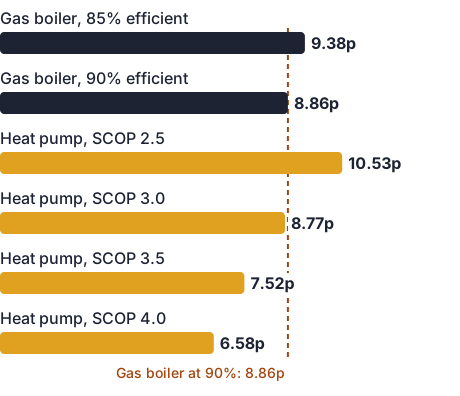
The break-even SCOP is the electricity price divided by the cost of heat from gas. Against a 90% boiler it is 2.97; against an 85% boiler it is 2.81. Below that, the heat pump costs more to run. Above it, it costs less.
What it means for a year’s bill
Take Ofgem’s typical home, which uses 9,500 kWh of gas a year for heating and hot water. With a 90% efficient boiler, that is about 8,550 kWh of heat. The gas for that costs £757 a year, plus £108 of gas standing charge (29.68p a day).
| Heat pump SCOP | Electricity used | Running cost | vs gas (keep gas supply) | vs gas (gas account closed) |
|---|---|---|---|---|
| 2.5 | 3,420 kWh | £900 | £143 more | £35 more |
| 3.0 | 2,850 kWh | £750 | £7 less | £115 less |
| 3.5 | 2,443 kWh | £643 | £114 less | £223 less |
| 4.0 | 2,138 kWh | £563 | £195 less | £303 less |
If your boiler is older and only about 85% efficient, the heat pump does slightly better: at SCOP 3.5 it saves about £150 a year with the gas supply kept, or about £258 with it closed.
The gas standing charge matters
If a heat pump replaces all your gas use, including cooking, you can close your gas account and stop paying the gas standing charge, currently £108 a year on average. That alone can turn a small loss into a small saving. If you keep a gas hob, you keep paying it.
Heat pump tariffs change the answer
The figures above use the standard capped electricity price for every unit. Many suppliers now sell time-of-use or heat-pump-specific tariffs with cheaper electricity at certain hours, and Ofgem notes that many offer cheaper off-peak electricity to smart meter customers. Prices vary by supplier and change often, so we use an illustrative figure:
If the electricity your heat pump uses averaged 18p per kWh, the same home would pay about £513 a year at SCOP 3.0, saving around £244 against gas (£352 with the gas account closed). At SCOP 3.5 it would pay about £440, saving roughly £317 (or £426).
The catch: a tariff only helps if your heat pump actually runs in the cheap hours, and the rest of your household electricity may cost more. Compare the whole bill, not just one rate.
Run it with your own usage and tariff. The calculator also shows your break-even SCOP.
Open the calculatorHow to make sure your heat pump beats gas
SCOP is not fixed by the box you buy. It depends heavily on how the system is designed and set up:
- Low flow temperature. The cooler the water sent to your radiators, the more efficient the heat pump. That usually needs correctly sized, sometimes bigger, radiators.
- Correct sizing from a room-by-room heat loss calculation. An oversized unit switches on and off too often; an undersized one struggles in cold weather.
- Weather compensation controls, which lower the water temperature automatically on milder days.
- Running it steadily rather than blasting heat for short periods like a boiler.
- Insulation and draught-proofing, which cut the heat you need in the first place.
Ask every installer what SCOP or flow temperature their design is based on, and get it in writing. Our heat pump cost guide has a full checklist for comparing quotes.
What could change these numbers
- VAT on electricity. Household electricity carries no VAT from 1 October 2026 to 31 March 2027. If 5% VAT returned on the same rate, electricity would cost about 27.64p and the break-even SCOP against a 90% boiler would rise from 2.97 to about 3.12.
- The January price cap. Ofgem sets it by 25 November 2026. The October rise was mostly gas, and if gas keeps rising faster than electricity, heat pumps gain. Read the price cap guide.
- Oil and LPG homes. These are usually where heat pumps save the most, because those fuels and older boilers are expensive to run. We will cover them in a separate guide.
Frequently asked questions
Is a heat pump cheaper to run than a gas boiler in 2026?
At the October 2026 price cap, only if it reaches a seasonal efficiency (SCOP) of about 3 or more against a modern boiler. A well-designed system usually can. A cheaper heat pump tariff makes a saving much more likely.
What is a good SCOP for an air source heat pump?
Around 3.5 or higher is a good real-world result for a well-designed system. Below 3, it is likely to cost more to run than a modern gas boiler at current standard prices.
Should I close my gas account after getting a heat pump?
If you no longer use gas for anything, closing it saves the gas standing charge, about £108 a year on average at October 2026 rates. If you keep a gas hob, you will still pay it.
Does the heat pump also heat my hot water?
Usually yes, through a hot water cylinder. Our figures assume the heat pump replaces all the heating and hot water your gas boiler provided.
Why do some websites say heat pumps save £500 or more a year?
Those figures usually assume a cheap heat pump tariff, an old inefficient boiler, oil or LPG heating, or a high SCOP. Each can be true for some homes. Check which assumptions apply to yours.
Sources
- Ofgem: price cap unit rates and standing charges, October–December 2026
- Ofgem: Energy price cap will rise by 4% from October 2026 (VAT on electricity, off-peak tariffs)
- Ofgem: summary of changes from 1 July 2026 (typical usage of 2,500 kWh electricity and 9,500 kWh gas)