How much do solar panels cost in the UK in 2026?
A typical 4.5 kWp solar system costs about £7,600 and pays back in 9 to 12 years, according to the Energy Saving Trust. What drives the price and how to check a quote.
Numbers checked against official sources on 7 October 2026
In 30 seconds
- A typical home solar system is about 4.5 kWp (around 12 panels) and costs about £7,600 installed, according to the Energy Saving Trust.
- The Energy Saving Trust estimates it pays for itself in about 9 years in London and 11 to 12 years in Stirling, including export payments.
- Government estimates put solar panels with a battery at £9,000 to £12,000.
- Installation is VAT-free until 31 March 2027; after that 5% would add about £380 to a £7,600 system.
Solar panels are the most popular home energy upgrade in Britain, and also the one with the most confusing prices online. This guide uses the Energy Saving Trust’s current figures for a typical system, shows how long it takes to pay back in different parts of the UK, and explains what pushes a quote up or down.
On this page
What a typical system costs
The Energy Saving Trust (EST), a government-funded advice body, describes the average home system like this:
| System size | about 4.5 kWp |
| Number of panels | around 12 |
| Roof area | 20 to 30 m² |
| Installed cost | about £7,600 |
kWp (kilowatt peak) is the system’s output in ideal sunshine. You rarely get the peak in the UK, but it is the standard way to compare system sizes.
Adding a home battery lets you store daytime solar for the evening. The government estimates the average cost of installing solar and a battery at £9,000 to £12,000, as reported when it published its Warm Homes Plan (Energy Institute).
How long it takes to pay back
EST estimates the payback period, the number of years until savings on your bills plus export payments cover the installation cost, for the same typical system in different places. Its figures assume prices and export rates in July 2026:
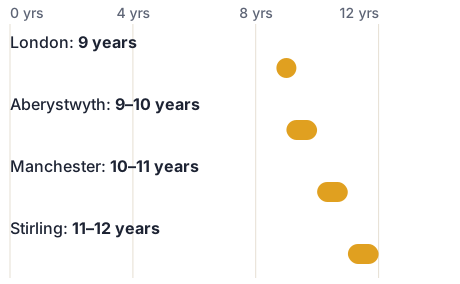
Try your own roof, region and tariff in our solar panel calculator. Further south means more sun and a faster payback, but even in central Scotland the estimate is around 11 to 12 years. Two things change your own figure most: how much of the electricity you use yourself, and the export rate you get for the rest. Using your own solar saves the full import price, currently around 26p per kWh at the price cap, while exporting earns whatever your tariff pays. See our guide to export rates.
What pushes the price up or down
System size
More panels cost more in total but less per kWp, because scaffolding, the inverter and labour are partly fixed costs. If your roof has room, it is often worth asking for a price on a slightly larger system.
Your roof
EST says an unshaded, south-facing roof is ideal. East or west-facing roofs produce about 15% to 20% less. Shade from trees, chimneys or neighbouring buildings reduces output. Flat roofs work, with panels tilted on frames.
Access and scaffolding
Tall houses, conservatories in the way and tricky access add scaffolding cost. Terraces may need permission to use a neighbour’s side.
Battery, diverter and inverter
A battery adds several thousand pounds. A solar diverter, which sends spare power to your hot water cylinder, is a cheaper way to use more of your own electricity if you have a cylinder.
VAT: the 31 March 2027 deadline
Installing solar panels and batteries in a home is zero-rated for VAT until 31 March 2027, after which HMRC says it reverts to 5%. On a £7,600 system that would add about £380; on a £10,000 solar and battery system, about £500. Read what the change covers.
Do you need planning permission?
EST says solar panels on homes are usually “permitted development”, so no planning application is needed. The exceptions are listed buildings, conservation areas and national parks, where you should check with your council first.
Grants and finance
There is no national grant for solar panels for most households. Lower-income households may get fully funded measures through the government’s Warm Homes Plan, which also promises low- and zero-interest loans for homeowners for solar panels, batteries and heat pumps (Energy Institute). See what is available now in our solar grants guide and the Warm Homes Plan explained.
Selling your spare electricity? Export rates range from 2p to 20p per kWh. See who pays what.
Compare export ratesHow to check a solar quote
- MCS certification for the installer and the system, which you need to get paid for exporting under the Smart Export Guarantee.
- System size in kWp, panel model and number, inverter model.
- Estimated annual generation in kWh, and how it was calculated, including any shading.
- Price per kWp, so you can compare quotes of different sizes.
- Scaffolding, electrical work and any battery listed separately.
- Warranties on panels, inverter and workmanship.
Frequently asked questions
How much do solar panels cost in the UK in 2026?
About £7,600 for a typical 4.5 kWp system of around 12 panels, according to the Energy Saving Trust. With a battery, government estimates put the total at £9,000 to £12,000.
How long do solar panels take to pay for themselves?
The Energy Saving Trust estimates around 9 years in London, 10 to 11 in Manchester and 11 to 12 in Stirling, based on July 2026 prices and including export payments.
Do solar panels work on east or west-facing roofs?
Yes, but they produce about 15% to 20% less than on an unshaded south-facing roof, according to the Energy Saving Trust.
Is there VAT on solar panels?
Not until 31 March 2027 when installed in a home. From 1 April 2027 the rate goes to 5%, according to HMRC.
Do I need planning permission for solar panels?
Usually not. Listed buildings, conservation areas and national parks are the main exceptions.