Do heat pumps work in cold weather? What the UK trial found
In the UK’s largest heat pump trial, air source heat pumps kept working down to −6°C with a median efficiency of 2.44. What a cold snap does to your bill.
Numbers checked against official sources on 7 October 2026

In 30 seconds
- Yes, heat pumps work in a British winter. In the government-funded Electrification of Heat trial, air source heat pumps kept heating homes on the coldest days, with outside temperatures down to −6°C.
- They do get less efficient as it gets colder. Across the trial the median seasonal efficiency was 2.80; on the coldest days it fell to 2.44.
- That means a cold week costs more to run than a mild one. What matters for your bill is the average over the whole winter.
- Good design (correct sizing, low flow temperature, weather compensation) is what keeps a heat pump efficient when it is cold.
The most common worry about heat pumps is simple: if a heat pump takes heat from the outside air, what happens when the outside air is freezing? The short answer is that it keeps working, because there is still usable heat in air well below zero. The longer answer is about efficiency, and that is what affects your bill. Here is what the UK’s largest field trial found, and what to expect on a cold January morning.
On this page
How a heat pump gets heat out of cold air
A heat pump works like a fridge in reverse. A refrigerant inside the outdoor unit is colder than the outside air, even on a frosty day, so heat flows from the air into it. A compressor, powered by electricity, then raises that heat to a temperature useful for your radiators and hot water.
The colder the air, the harder the compressor has to work to lift the heat to the temperature you need. So the heat pump still delivers heat, but each kWh of electricity buys a little less heat than on a mild day. That ratio is the coefficient of performance (COP); averaged over a whole year it is called the seasonal performance (SCOP or SPF).
What the UK field trial found
The Electrification of Heat demonstration project, run by Energy Systems Catapult for the government, installed 742 heat pumps in a wide mix of British homes and monitored how they performed. Its analysis of the real-world data found (Energy Systems Catapult, March 2023):
- a median seasonal performance of 2.80 for air source heat pumps, 30% to 40% better than earlier UK trials from 2011 to 2014;
- on the coldest days of the monitoring period, with temperatures as low as −6°C, the median efficiency was 2.44;
- high-temperature air source heat pumps were about as efficient as standard ones.
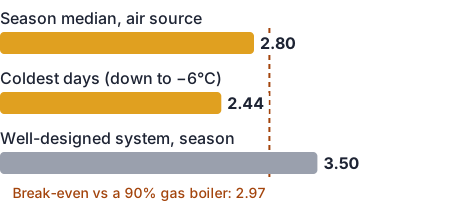
In plain terms: on the coldest days of the trial, the typical heat pump still produced around 2.4 units of heat for every unit of electricity. A gas boiler, by comparison, produces less than one unit of heat per unit of gas.
Note on dates. These results come from systems installed in 2020 and 2021. Installer practice and equipment have moved on since, so newer, well-designed systems may do better. We use the trial because it is the largest independent set of real UK data.
What a cold snap does to your running costs
Because efficiency drops on cold days, so does the value you get from each unit of electricity. At the October 2026 price cap (26.32p per kWh of electricity and 7.97p per kWh of gas, from Ofgem):
| Situation | Efficiency | Cost of 1 kWh of heat |
|---|---|---|
| Heat pump, trial median over the season | 2.80 | 9.40p |
| Heat pump, trial median on the coldest days | 2.44 | 10.79p |
| Heat pump, well-designed system over the season | 3.50 | 7.52p |
| Gas boiler, 90% efficient | 0.90 | 8.86p |
Two lessons. First, on the very coldest days a heat pump on a standard tariff can cost more per unit of heat than gas. Second, those days are a small share of the year, so the seasonal figure is the one that decides your bill. A system that averages 3.5 over the winter still beats gas comfortably at current prices. We go through the full annual sums in heat pump vs gas boiler running costs.
Frost, defrosting and what you will notice
On cold, damp days, frost can form on the outdoor unit’s fins. Heat pumps deal with this automatically with a short defrost cycle, which briefly reverses the process to melt the ice. You might notice:
- the fan stopping for a few minutes;
- a cloud of steam from the unit, which is normal;
- water dripping from underneath, which needs somewhere to drain.
Defrosting uses a little energy, which is part of why efficiency falls in cold, wet weather. A good installer makes sure the meltwater drains away safely so it does not freeze into a slippery patch on a path.
Why design matters more than the weather
A heat pump does not fail in winter because it is cold outside. It underperforms because it was designed for an easier job than the one it gets. The factors that protect efficiency on cold days are the same ones that matter all year:
- Sized for a cold day in your area. The installer should size the system from a room-by-room heat loss calculation, for a cold “design day” where you live, not a rule of thumb.
- A low flow temperature. The cooler the water sent to the radiators, the less the compressor has to lift the heat. That usually means some larger radiators.
- Weather compensation. Controls that set the water temperature from the outside temperature, so the heat pump only works as hard as it needs to.
- Steady running. Heat pumps are most efficient running gently for long periods. Switching the heating off overnight and blasting it in the morning, as people often do with a boiler, can make a heat pump less efficient.
- Insulation and draught-proofing. Less heat lost means a smaller system and less work on the coldest days.
If you are getting quotes, our installer checklist lists the questions that expose a weak design.
See what a cold winter would cost you. Try a lower efficiency in the calculator to model a tough year.
Open the calculatorFrequently asked questions
Do heat pumps stop working below freezing?
No. Air source heat pumps keep producing heat well below 0°C. In the UK Electrification of Heat trial they kept working on days as cold as −6°C, with a median efficiency of 2.44.
Is a heat pump more expensive to run in winter?
Yes, a little per unit of heat, because efficiency falls when it is colder and you need more heat. Your annual cost depends on the seasonal average, which for a well-designed system is usually well above 3.
Why is steam coming out of my heat pump?
That is usually the defrost cycle melting frost from the outdoor unit. It is normal and lasts a few minutes.
Do I need a backup heater?
A correctly sized heat pump should heat your home on its own on a cold day in your area. Many systems have an electric immersion or backup element, mainly for hot water hygiene cycles. Ask your installer what theirs is for and how often it should run.
Should I turn the heat pump off when I go out?
Usually not. Heat pumps work best keeping a steady temperature. Ask your installer how to set the schedule for your system; a small night-time setback is fine on many systems.